





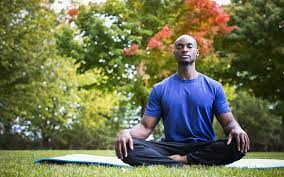
Need To Unwind? Try Meditation
One of the principles that I teach in my blog is the idea to let go of the past, not dwell on the future, and to stay in the here and now. One way to do this is through meditation - the practice of training your mind to focus on one thing at a time, and to be fully present in the moment. If you’re like me, you sometimes have the problem of too much going on in your head to concentrate on the task at hand. People who meditate report learning to quiet this constant chatter and enhance their calm and focus.
While some forms of meditation have roots in Hinduism and Buddhism, meditation is not an inherently spiritual or religious practice. Instead, people who meditate aim to tune into themselves to experience inner quiet and cultivate a state of peaceful contemplation.
Meditation is a highly researched, evidence-based tool that can foster increased well-being – mentally, physically, cognitively, and emotionally. Meditating may help you:
- Quiet your mind and be more present
- Improve memory, attention, and focus
- Increase productivity
- Reduce stress
- Increase contentment and decrease depression
- Manage negative emotions, physical pain, and addiction
- Increase energy and self-esteem
- Improve sleep patterns
- Create deeper levels of relaxation
Some research indicates that regular mediation may even increase brain size and grey matter, improve intelligence and creativity, strengthen the immune system, normalize blood sugar, and lower blood pressure, heart rate, cholesterol, and the buildup of plaque in coronary arteries. The benefits of meditation can be seen with even a little practice and maximized through consistent use.
Meditation can take many forms. However, its foundation lies in being able to focus on one thing or object at a time, and to continually re-focus when the mind drifts to other thoughts. Some inaccurately assume that meditation is an act of shutting down; in actuality, it’s an active process. Meditation is like exercise for your brain. The more you practice, the more efficient your brain becomes at re-focusing and remaining in the present moment.
Some people meditate while sitting still. Others do it through repetitive movements such as walking, biking, paddling, drawing, coloring, or even kneading bread dough – anything that allows you to focus your attention on the present moment, acknowledge thoughts and feelings as they arise and then to let them go out of your awareness.
This simple exercise is an excellent introduction to basic meditation techniques:
- Sit or lie comfortably and close your eyes.
- Take several deep breaths through your nose, releasing bodily tension on the out-breath.
- Focus your attention on the breath, making no effort to control your breathing. Simply breathe naturally. Notice how the breath moves in and out of the body with each inhalation and exhalation. Observe your chest, shoulders, rib cage, or belly. Keep focusing on your breath without controlling its pace or intensity.
- If your mind wanders, observe without judgment the thoughts or emotions that have arisen and then release them, returning your focus back to your breath. When noticing thoughts or emotions, you might name them -- saying to yourself, “thinking” or “planning” or “worrying,” as this acknowledgement can help with letting them go.
Maintain this meditation practice for two to three minutes to start, and then try it for longer periods. Meditation is typically easier and more successful when you detach from trying to “get it right.” Instead, just be present to what is. The benefits of meditation occur even when you are noticing the “chatter” of your mind. Like any skill, mastering one’s mind takes practice. Enjoy any moments of pure silence or peace that arise amid the chatter and build upon those. Even a few minutes of meditation daily is better than none at all and can result in real benefits.